

What Getting an Ijazah Actually Involves (And Why It Takes Longer Than People Expect)
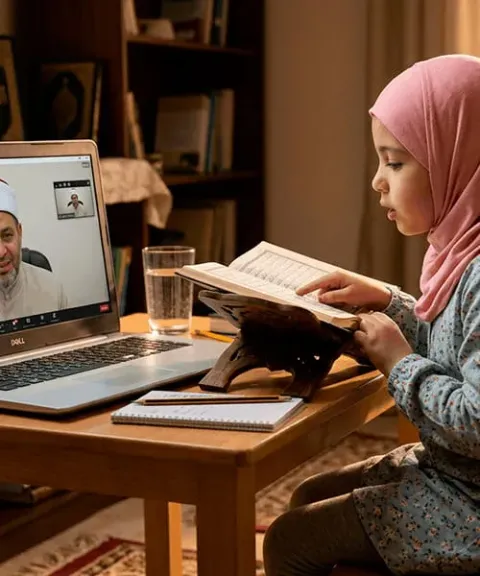
There is a common misconception that an ijazah is something you can rush through in a few months if you just practice hard enough. In reality, the process is far more about precision and consistency than raw effort in a short window. Most teachers who issue ijazah certifications will tell you the same thing: the student's patience matters more than their natural talent at reciting quickly.
The core of the process is repetition under close supervision. Every mistake, no matter how small, needs to be corrected and then reinforced correctly over several repetitions before moving forward. This is very different from casual daily reading, where a small slip might go unnoticed. An ijazah path requires a teacher who is genuinely strict about detail, not in a harsh way, but in a way that refuses to let small errors slide just to keep the pace moving.
A lot of adults interested in this path ask whether it can realistically be done online, and the honest answer is yes, provided the platform is structured properly. Online ijazah classes have become far more reliable over the past few years, mainly because audio quality and scheduling flexibility have improved enough that close supervision is genuinely possible remotely, which was not really the case a decade ago.
Timing expectations are where most people get discouraged early. Depending on prior experience and how much time a student can dedicate weekly, the process commonly takes well over a year, sometimes closer to two or three depending on consistency. Students who treat it as a long term commitment rather than a short course tend to have a much better experience than those expecting quick results, because the frustration of slow progress is far easier to manage when it was expected from the start.
For parents thinking ahead about their children eventually pursuing something similar, starting them early with structured Islamic classes for kids tends to build the discipline and attention to detail that later makes an ijazah path much smoother, since the habit of careful repetition becomes normal rather than a sudden new demand placed on an older child or teenager.
What I would tell anyone seriously considering this path is to pick a teacher based on their track record of actually producing certified students, not just their own personal recitation skill, which are related but not identical things. Programs run through online Quran classes for kids tend to emphasize this distinction, focusing on teaching methodology rather than simply showcasing the instructor's own ability, which in the long run is what actually determines whether a student successfully completes the certification.
Adult students in particular often underestimate how much prior habits from casual reading need to be unlearned before an ijazah path can really begin. Small mispronunciations that never got corrected over years of casual practice can become surprisingly stubborn once a teacher starts pointing them out consistently. This stage can feel discouraging at first, almost like starting over, but it is a completely normal part of the process rather than a sign of doing something wrong.
Scheduling consistency also plays a bigger role than people expect. Students who commit to a fixed weekly time, even if it is just one or two sessions, tend to progress far more steadily than those who schedule sessions whenever they happen to find time. The irregular approach might feel more flexible on paper, but it actually slows retention significantly because there is no consistent rhythm for the brain to settle into.
For anyone still deciding whether to commit to this path, it helps to speak directly with a teacher beforehand about realistic expectations rather than relying purely on marketing descriptions. A good teacher will be upfront about the time commitment involved and will not promise an unrealistically fast timeline just to secure a new student, since a rushed certification ultimately does not hold the same value as one earned through genuine, careful practice.
It is also worth thinking about what happens after certification, since some students treat it as a finish line rather than the beginning of a lifelong maintenance habit. Recitation skills, like any learned skill, can drift back toward old habits if regular practice stops entirely after the certificate is issued. The strongest students tend to keep a light ongoing routine even after finishing, purely to preserve the precision they worked so hard to build over the previous months or years.
Finding the right teacher also often comes down to communication style as much as qualification. Some students respond better to a very direct, correction heavy style, while others need a gentler approach to stay motivated over a long stretch. Talking to a prospective teacher beforehand about how they handle repeated mistakes can save months of mismatched expectations later in the process.
It also helps to keep a simple written log of which sections have been reviewed and corrected, rather than relying purely on memory of past sessions. Over many months, this kind of record makes it much easier for both student and teacher to spot recurring weak spots that keep resurfacing, instead of assuming an area is solid just because it was not flagged in the most recent session.